 Uncategorized
Conservation course – Student’s visit at Basilica of San…
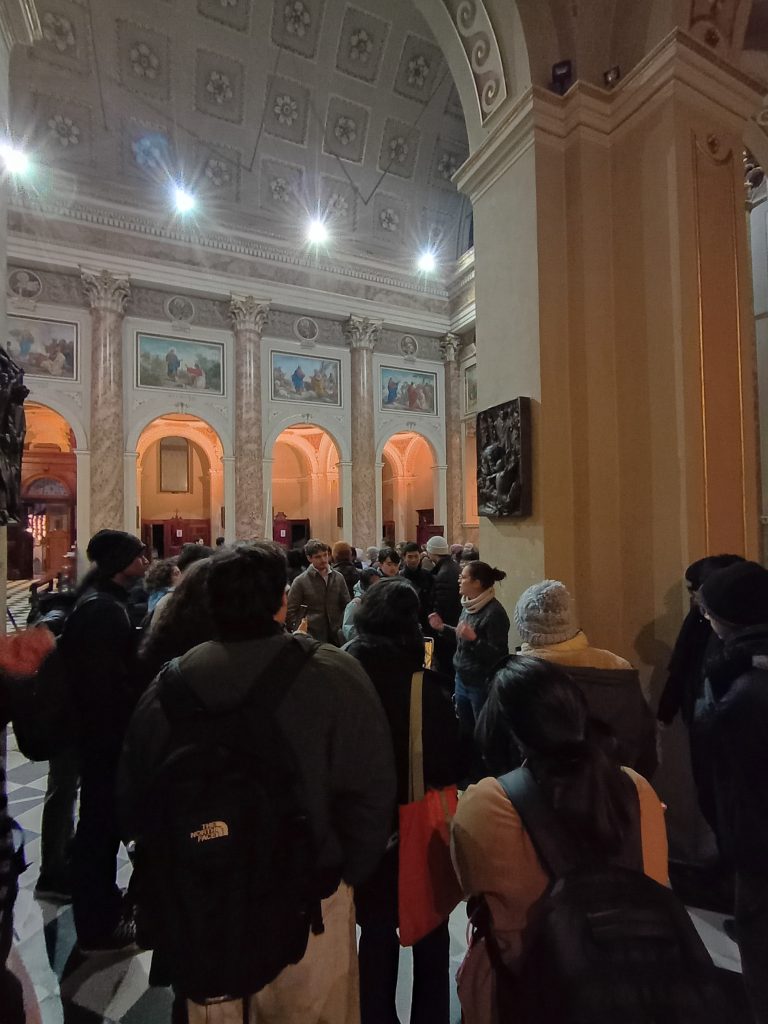
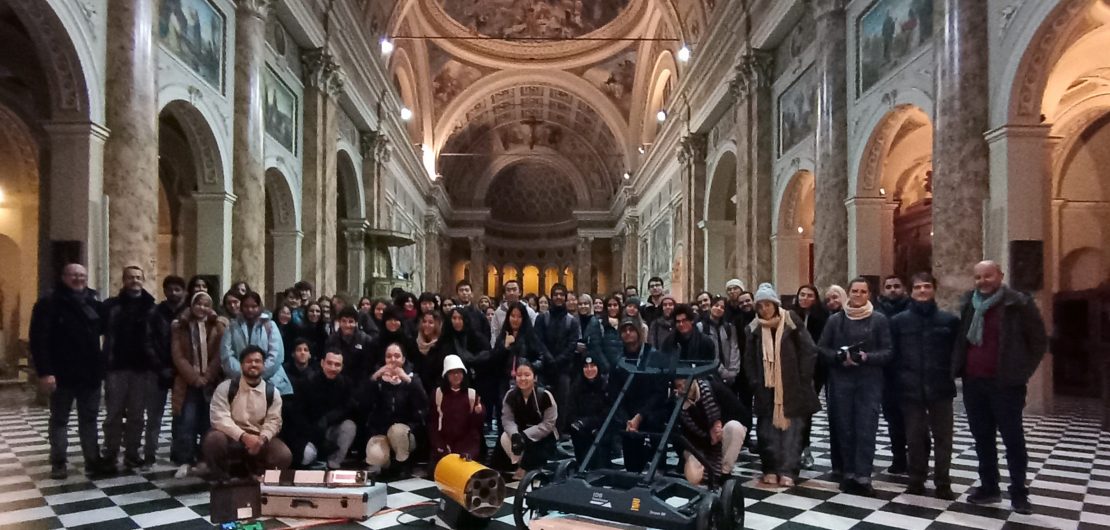
On Monday, November 24th, during the afternoon opening, 76 students from the Conservation course by Professor Lorenzo Cantini visited the Basilica of San Nicolò (Lecco) to attend a series of practical demonstrations on the use of experimental technologies for the analysis of historic structures.
The students were accompanied to various locations within the building, characterized by a significant stratification of construction phases, to study its hidden characteristics using various technologies commonly employed in restoration to deepen their understanding concerning construction techniques.
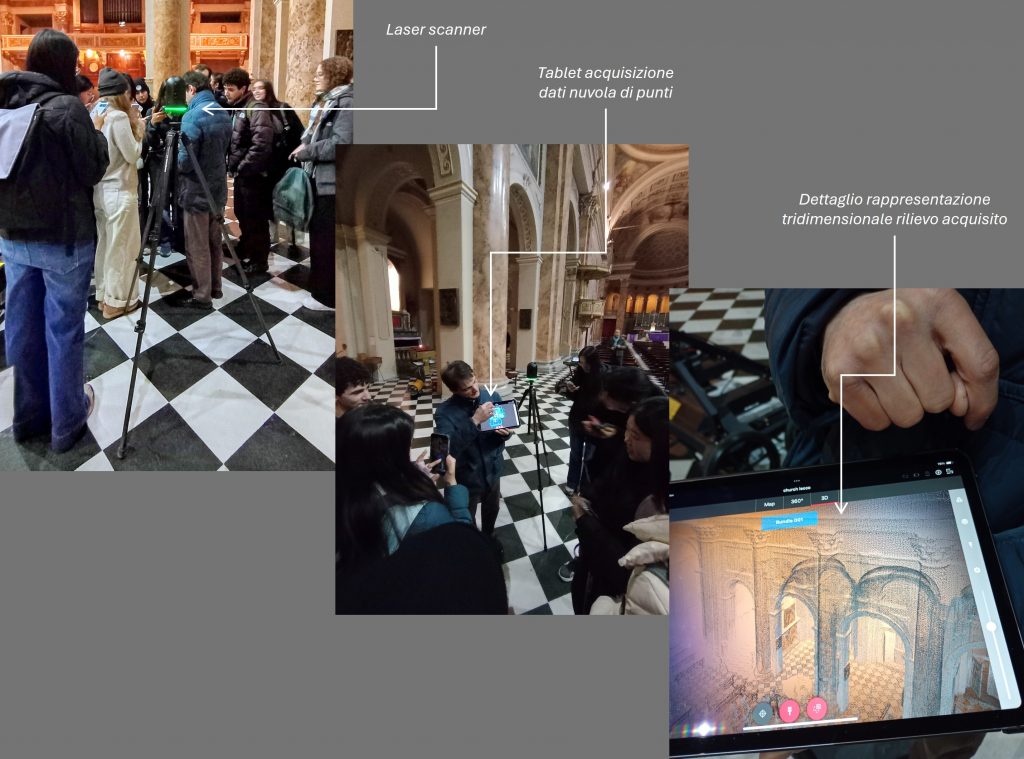
Using a laser scanner, Professor Mattia Previtali, teaching advanced surveying techniques, demonstrated how an accurate survey of the building can be useful for facing the complexity such monumental typologies.
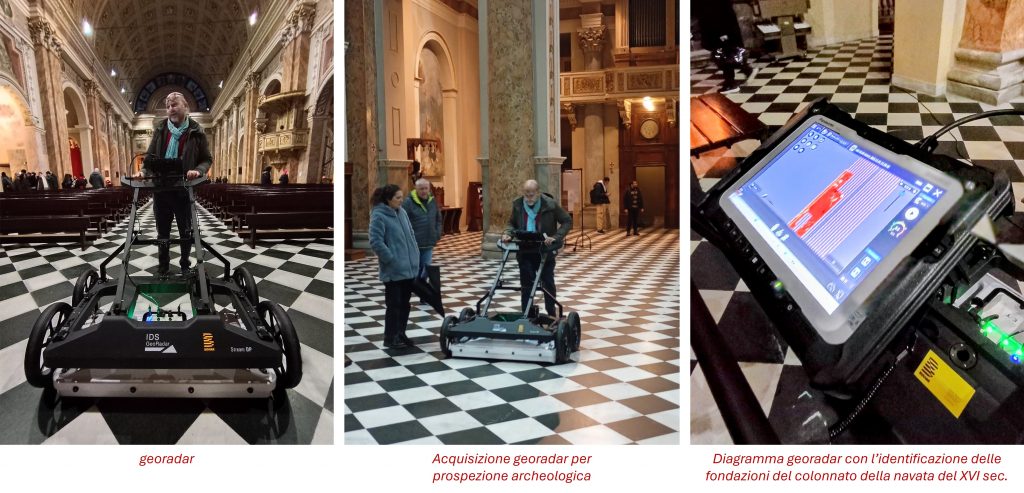
Through archaeological surveys conducted with dedicated ground-penetrating radar equipment, Eng. Marco Ciano of the BOVIAR (Integrated Diagnostic and Monitoring Systems) company identified the position of the column foundations of the internal nave of the ancient 16th-century church beneath the floor. This church was demolished in the 19th century to allow for the renovation of the building according to Giuseppe Bovara’s design.
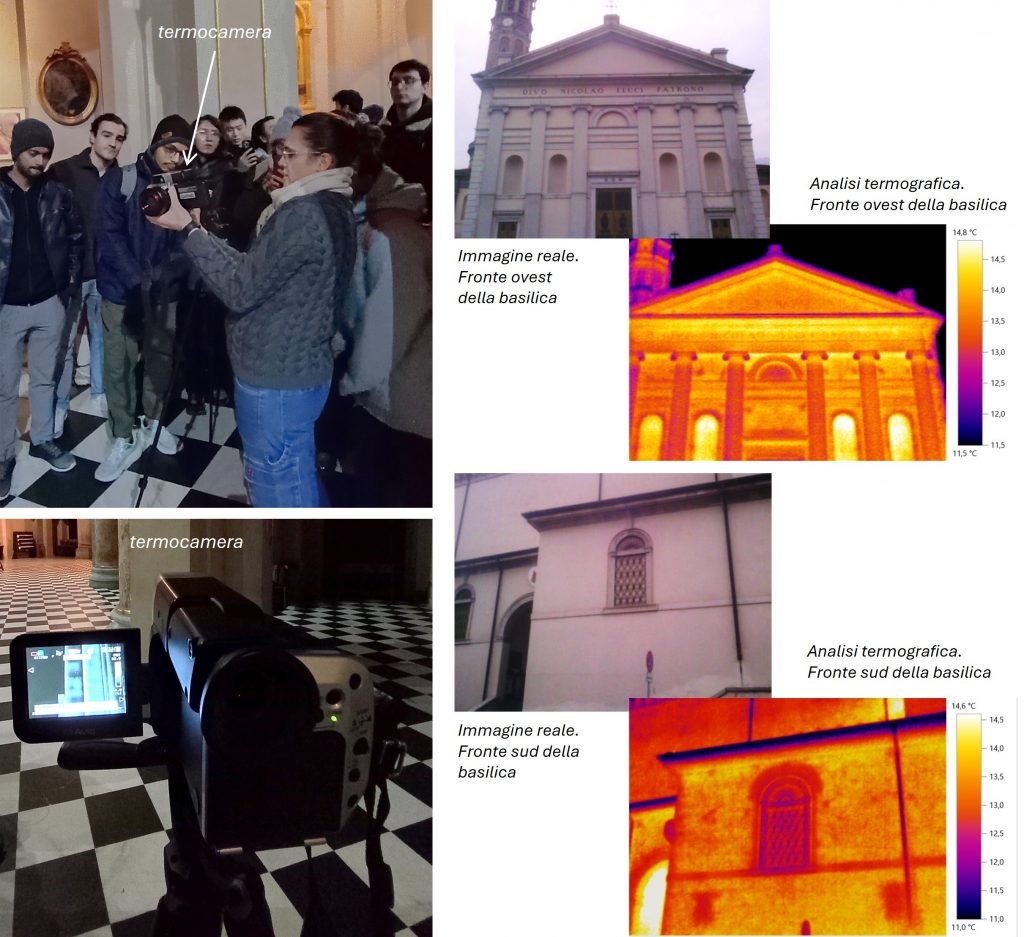
In the neoclassical renovation of the Renaissance-era structures, Bovara integrated the new pillars supporting the monumental barrel vault with existing masonry. This patchwork of precisely squared stone blocks and brick additions is clearly visible beneath the plaster and stucco work that renders all the surfaces uniform. This was done through thermographic observations conducted by architects Laura Bolondi and Riccardo De Ponti of the Arch-Indagini studio. They then demonstrated sonic tests to characterize the masonry cross-section of a pillar and penetrometric tests on the wooden beams of a floor belonging to the old 17th-century bell tower, now incorporated into the new 19th-century volume of the building enlarged by Bovara.
This educational experience provided students enrolled in the Architectural Engineering degree program with the appropriate skills needed to define interventions on protected architectural heritage. This opportunity was made possible thanks to colleagues and former researchers, as well as former undergraduates, who today pursue their passion for the preservation of historic architecture by working in the field of diagnostic investigations for the analysis and monitoring of built heritage.